
Can Cats See In The Dark
You may have wondered at some point if cats possess the mystical ability to see in complete darkness. It’s one of those puzzling characteristics that seems to add to their enigmatic charm. Well, the truth is, cats do have impressive night vision that allows them to navigate their surroundings with relative ease. However, it’s not quite the same as seeing in pitch-black darkness. Let’s take a closer look at the fascinating world of feline night vision and discover how cats are able to make the most of their nocturnal adventures.
Understanding Cat’s Vision
Comparing Cat’s Eye Anatomy to Human’s Eye Anatomy
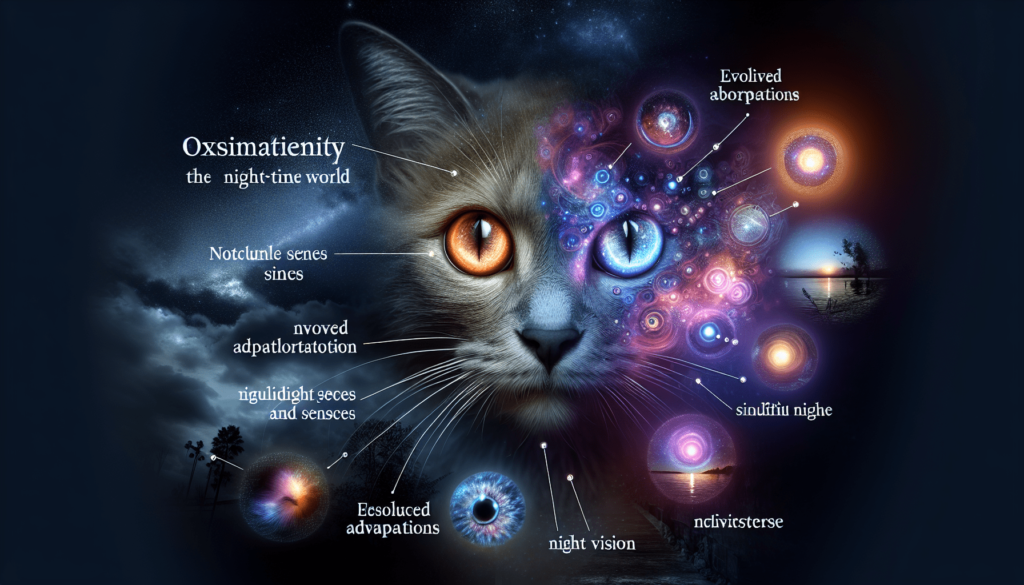
The anatomy of a cat’s eye differs in several ways from that of a human eye. Cats have a larger cornea and lens compared to humans, allowing more light to enter their eyes. The shape of a cat’s pupil is also unique, being slit-like instead of round like a human’s. Additionally, cats have a structure called the tapetum lucidum, which reflects light back through the retina, enhancing their night vision capabilities.
Role of Tapetum Lucidum in a Cat’s Eye
The tapetum lucidum is a highly reflective layer located behind the retina in a cat’s eye. This structure acts as a mirror, reflecting light that enters the eye back onto the retina. This reflection gives the retina a second chance to capture any available light, drastically improving a cat’s night vision. The tapetum lucidum is responsible for the characteristic glowing eyes often seen in cats when exposed to low-light conditions.
How Cat’s Pupil Shape Contributes to Their Night Vision
The unique shape of a cat’s pupil, which is elongated and slit-like, is well-suited for hunting in low-light conditions. When compared to a circular pupil, a cat’s slit-like pupil can quickly adjust its size, allowing for precise control of the amount of light entering the eye. This adaptation gives cats the advantage of being able to constrict their pupil to a narrow slit during bright daylight to protect their sensitive retinas, and dilating it to a larger size in darker environments to maximize the incoming light and enhance their night vision.
How Dark is Too Dark for Cats
Understanding the Limits of a Cat’s Night Vision
While cats have superior night vision compared to humans, there are limits to how dark of an environment they can navigate in. Cats rely on minimal available light to see clearly; therefore, complete darkness can pose challenges for them. In extremely dark environments, cats may rely more on their other senses, such as hearing and whiskers, to compensate for the lack of visual information.
Can Cats See in Complete Darkness
Contrary to popular belief, cats cannot see in complete darkness. They do, however, have better night vision than humans due to their enhanced ability to gather and process available light. In areas with no source of light whatsoever, cats may struggle to distinguish objects and navigate effectively.
What Colors Can Cats See in the Dark
While cats have excellent night vision, their ability to see colors in the dark is limited compared to humans. They primarily rely on the contrast between different shades of gray to perceive their surroundings. This is why their vision may appear somewhat desaturated in low-light conditions.
Cats and Dusk and Dawn
Why Cats are Naturals in Low-light Conditions
Cats are crepuscular animals, meaning they are most active during the periods of dawn and dusk when the light is dim. This natural preference for low-light conditions has likely developed over thousands of years to optimize their hunting abilities. Their eyes and visual adaptations are perfectly suited for this twilight period, allowing them to spot prey and navigate efficiently.
Cats and the Twilight Hunting Advantage
During dawn and dusk, when the sun is near the horizon, the lighting conditions create long shadows and increased contrast. This gives cats a significant advantage when hunting. Their eyes are exceptionally adept at detecting movement in low light, and they can precisely judge distances, making them highly successful predators during these times.
Other Factors That Enhance Cats’ Vision in the Dark
Cat’s Extraordinary Peripheral Vision
In addition to their exceptional night vision, cats also possess remarkable peripheral vision. Their eyes are positioned more towards the sides of their head compared to humans, allowing them to have a broader field of view. This wide peripheral vision enables cats to detect objects and movements from the corners of their eyes, even in dimly lit environments.
Role of Whiskers in Navigating Dark Spaces
Whiskers, or vibrissae, play a crucial role in a cat’s navigation through dark spaces. These specialized hairs are connected to nerve cells that are extremely sensitive to touch. When a cat moves through a dark area, its whiskers brush against surrounding objects, providing tactile information about the size, shape, and proximity of obstacles. This tactile feedback, combined with their enhanced night vision, allows cats to navigate confidently in even the darkest of spaces.
Effects of Domestication on Cat’s Night Vision
Comparing Night Vision of House Cats and Wild Cats
The process of domestication has led to some changes in the night vision capabilities of house cats compared to their wild counterparts. While domestic cats still retain many of the adaptations for excellent night vision, there may be slight variations due to selective breeding and environmental factors. However, overall, domestic cats continue to possess superior night vision compared to humans.
How Domestication Has Affected Cats’ Night Vision Abilities
The shift from wild to domestic environments has influenced the nocturnal habits and night vision of cats. Domestic cats, being exposed to artificial lighting and living in well-lit households, may not rely on their night vision to the same extent as their wild counterparts. However, the genetic traits for superior night vision still exist within domestic cat populations, and they can quickly adapt to low-light conditions when needed.
How Health Issues Can Impact a Cat’s Vision in the Dark
Common Eye Problems in Cats That Can Affect Night Vision
Several eye problems can impact a cat’s night vision. Conditions such as cataracts, glaucoma, retinal degeneration, and corneal ulcers can cause visual impairment, making it more challenging for a cat to see clearly in the dark. It is crucial for cat owners to monitor their pet’s eye health and seek veterinary care if any visual changes are noticed.
Symptoms of Vision Problems in Cats
Some common symptoms of vision problems in cats include dilated or constricted pupils, cloudy or hazy appearance of the eyes, difficulty navigating in low-light conditions, increased clumsiness, and reluctance to move around unfamiliar areas. If any of these signs are observed, it is important to consult a veterinarian for a thorough eye examination.
Treatment and Prevention of Cat Eye Problems Affecting Night Vision
The treatment and prevention of cat eye problems vary depending on the specific condition. Medical treatments, such as eye drops or ointments, may be prescribed to manage certain eye conditions. In more severe cases, surgery might be necessary. Regular veterinary check-ups, a balanced diet, and a safe environment can contribute to maintaining a cat’s overall eye health and reducing the risk of vision problems that affect their night vision.
Understanding How a Cat Reacts to Darkness
Assessing a Cat’s Comfort Level in Darkness
Cats have a natural affinity for darkness and are generally comfortable in low-light conditions. However, each cat is different, and their comfort level in the dark may vary. Some cats may prefer a completely dark environment, while others may show signs of unease in pitch-black conditions. It’s important to observe and respect a cat’s preferences and provide a safe and comfortable environment for them to navigate in low-light settings.
Cat Behavior Changes in Dark Environments
In dark environments, cats may exhibit certain behavior changes. They may move more slowly and cautiously, relying on their other senses to gather information about their surroundings. Cats may also become more vocal or use their whiskers more extensively to navigate through unfamiliar spaces. Understanding these behavioral cues can help cat owners create a nighttime environment that is conducive to their pet’s well-being.
Tips to Enhance Your Cat’s Safety in the Dark
Keeping Your Cat Safe Outdoors at Night
If your cat ventures outdoors at night, there are several precautions you can take to enhance their safety. Ensure they have a well-fitting collar with a reflective tag or use a reflective harness that makes them more visible to passing vehicles. Installing motion-activated outdoor lighting can also help improve visibility around your property. Additionally, providing a warm and secure outdoor shelter for your cat can offer them a safe retreat during nighttime explorations.
Safeguarding Your Home for Cat’s Night Time Activities
Creating a cat-friendly environment within your home is essential for their nighttime activities. Keep walkways and stairs free of clutter to prevent accidents, particularly in areas with low lighting. Place nightlights strategically to provide a gentle illumination, making it easier for your cat to navigate around the house. By minimizing potential hazards and ensuring comfortable lighting, you can create a night-time haven for your feline companion.
Fun Facts About Cat’s Night Vision
Interesting Comparisons Between Cat and Other Nocturnal Animals
Cats are known for their exceptional night vision, but they are not the only creatures that excel in low-light conditions. Some other nocturnal animals, such as owls and bats, also have remarkable adaptations to enhance their vision in the dark. Owls, for example, have developed large eyes and specialized feathers around their face to improve their ability to capture and process available light, while bats use echolocation to navigate and locate prey in complete darkness.
Incredible Things Cats Can Do Because of Their Night Vision
The superior night vision of cats allows them to perform incredible feats in the dark. They can effortlessly navigate narrow spaces, jump onto elevated surfaces with precision, and even engage in graceful acrobatics. Cats’ ability to see in low-light conditions also enables them to detect and stalk prey effectively, making them formidable hunters even when their prey are most active at night.
Debunking Myths About Cat’s Vision in the Dark
Clarifying Misconceptions About a Cat’s Night Vision
There are several common misconceptions regarding a cat’s night vision. One prevalent myth is that cats can see perfectly in complete darkness. As explained earlier, cats cannot see in complete darkness but have superior night vision compared to humans. Another myth is that cats can only see in shades of black and white. While their color perception is limited in low-light conditions, cats can still perceive various shades of gray.
The Truth Behind Common Cat Vision Stereotypes
Contrary to popular belief, cats’ night vision is not solely reliant on their ability to detect movement. While they are highly skilled at detecting motion, their vision is more nuanced than just tracking moving objects. Cats have excellent depth perception, allowing them to accurately judge distances, and their combination of sharp focus and wide peripheral vision makes them versatile hunters capable of assessing their surroundings in the dark.